Renewable Energy
CAISO Solar Plus Storage: When Clean Energy Actually Counts
CAISO solar plus storage is reshaping renewable energy crediting rules. Learn how storage, hourly matching, and policy changes redefine when clean energy counts
Published on

CAISO Solar Plus Storage: Redefining When Clean Energy Counts
Solar power is the most dominant source of electricity in California, thanks to its abundant solar reserves, supportive renewable energy policies, and large-scale investment in photovoltaic infrastructure. According to the U.S. Energy Information Administration (EIA), California has more than 22.2 GW of utility-scale solar capacity, capable of producing tens of thousands of megawatt-hours of electricity during peak midday production periods. Utility-scale solar farms can generate more than 120,000 MWh of electricity during peak midday hours across the CAISO system, pushing renewable generation to record levels. But it’s not all sunshine (pun intended)...
While this rapid solar expansion represents a major success for clean energy policy, it is also forcing the electricity sector to rethink how renewable energy is defined, measured, and credited. In particular, energy storage is beginning to change the answer to a fundamental question: when does clean electricity actually count?
The rapid rise of solar has also created a new challenge for the power grid, namely solar energy is produced when the sun shines, but electricity demand often peaks later in the evening (CAISO, 2024 Special Report on Battery Storage).
This mismatch between day-time generation and night-time demand has accelerated the deployment of CAISO solar plus storage systems (California Independent System Operator), particularly batteries.
As batteries shift electricity across hours, regulators, registries, standards bodies, and market participants must decide whether the clean energy attribute belongs to the hour of generation, the hour of discharge, or some combination of the two. This issue is now front and center in the CAISO solar plus storage and CAISO battery storage market debate. The answer will not matter only in California, but also in the broader evolution of greenhouse gas accounting and clean electricity procurement.
To understand this debate, it is important to first examine how the western U.S. electricity system operates and why policymakers are now debating which hour should ultimately be credited as clean energy.
Throughout this article we focus on the western electrical system, including the CAISO balancing authority and the broader Western Electricity Coordinating Council (WECC), where solar-plus-storage deployment is advancing faster than anywhere else in North America.
The Rise of CAISO Solar Plus Storage
According to the California Energy Commission and CAISO market data, California has been at the forefront of renewable energy development for more than a decade. Ambitious climate policies, renewable portfolio standards, and strong market incentives have driven massive investment in solar generation.
The rapid expansion of solar generation has also driven major investment in CAISO solar plus storage infrastructure. As a result, California has also become the largest testing ground for the battery storage market in the United States.
While this growth represents major progress in decarbonizing the power sector, it has also introduced new operational challenges for grid operators. One of the most well-known illustrations of California’s grid dynamics is the duck curve, seen in Figure 1 below. It highlights how midday solar oversupply and steep evening ramps have strengthened the case for storage-backed solar projects.
The Duck Curve and Midday Oversupply
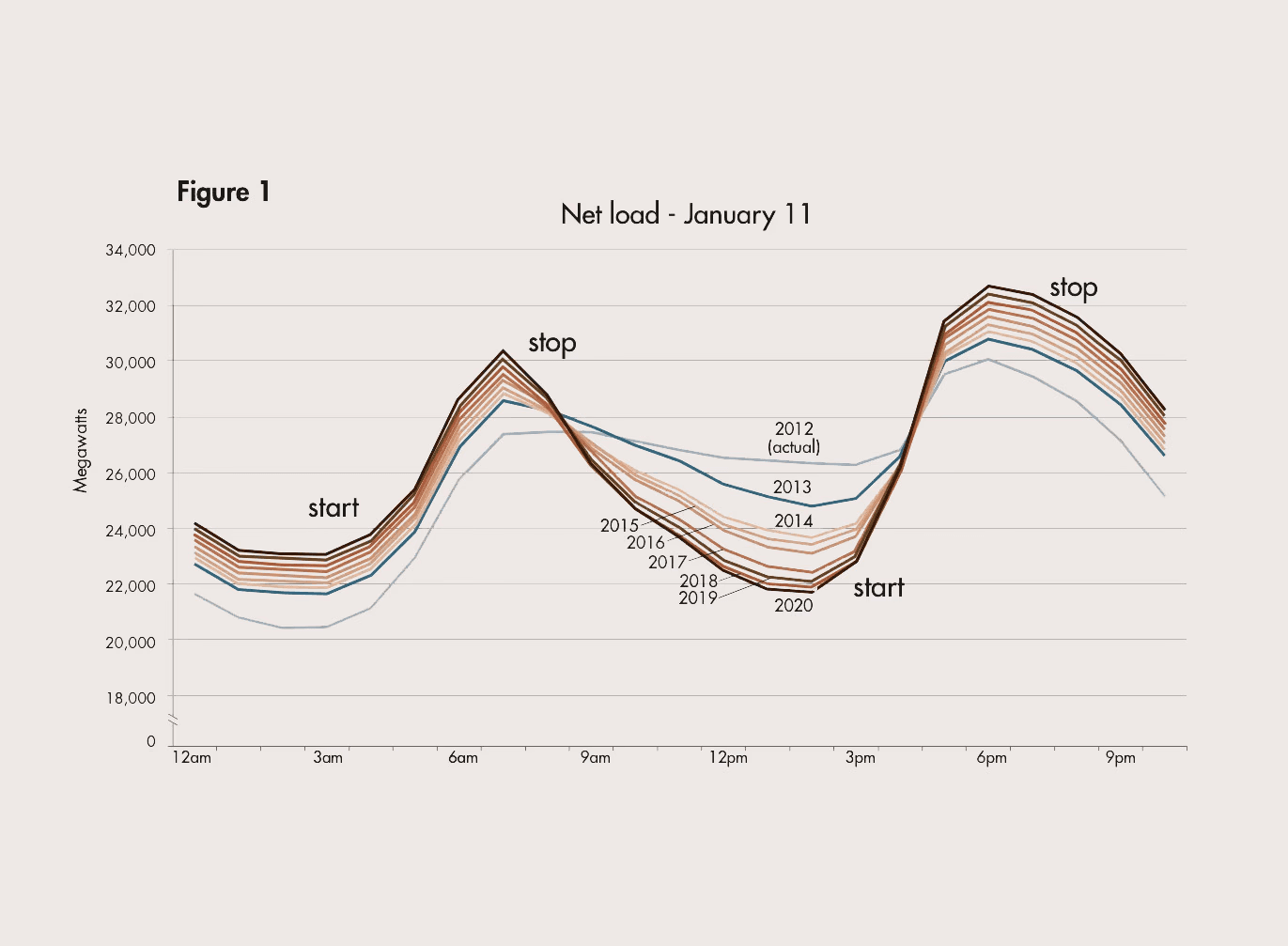
Figure 1: CAISO Duck Curve (CAISO Fast Facts)
In other words, solar energy is sometimes produced when the grid cannot fully use it, leading to oversupply, falling wholesale prices, and the curtailment of otherwise clean renewable electricity. This dynamic has made energy storage a critical component of California’s electricity system and has created strong economic incentives for the expansion of the CAISO solar plus storage market.
Energy Storage as the Natural Solution
Energy storage systems address the mismatch between solar generation and electricity demand. Instead of curtailing solar production, surplus electricity can be stored and released later when the grid needs it most.
Typical solar-plus-storage operations follow a predictable daily pattern:
Midday: Solar panels generate electricity and surplus energy is stored
Late afternoon: Solar output declines while stored energy remains available within the battery system
Evening peak: Solar energy storage systems discharge stored electricity and no solar energy is generated.
This ability to shift electricity through time is transforming how electricity systems operate. However, it also challenges long-standing assumptions about renewable energy accounting. Historically, renewable electricity was assumed to be consumed at the same time it was generated. Energy storage breaks this real-time relationship by allowing clean electricity to be generated at one hour but delivered to the grid many hours later. The shift is what makes storage such a central issue in the renewable energy crediting rules debate.
WECC and CAISO Solar Plus Storage
Across the Western electricity system, CAISO solar plus storage projects are rapidly becoming the preferred configuration for new renewable generation. In both the CAISO market and the broader Western Electricity Coordinating Council (WECC) region, developers increasingly pair solar generation with energy storage to improve grid flexibility and capture higher-value electricity prices during evening peak demand periods.
H3) Dual-Use Solar and Battery Projects
Many new renewable energy developments in California combine solar generation and battery storage within a single facility, such as the Edwards & Sanborn Solar plus Storage Project in Kern County, one of the largest hybrid solar-plus-storage projects in the world. These hybrid solar storage projects allow developers to maximize the value of solar electricity by shifting production to higher-value hours. They also allow project owners to reduce curtailment risk while improving grid reliability during evening peak demand. Instead of selling electricity only during the middle of the day, these projects can deliver power during the evening peak when demand and market prices are higher. These hybrid facilities represent a growing share of new storage-backed solar developments in the CAISO market.
The growing deployment of energy storage systems has therefore sparked a debate regarding how renewable energy crediting rules should apply when electricity is generated in one hour but delivered to the grid in another.
Why Renewable Energy Accounting Is Now Challenged
Historically, renewable energy credit systems were built around a straightforward assumption: electricity produced by renewable sources is considered clean at the moment it is generated. As an example, if a solar plant produced electricity at noon, the associated renewable energy certificate would correspond to that hour of generation. This framework worked well when renewable sources delivered electricity directly to the grid in real time. However, the rapid growth of storage-backed renewable generation means electricity can now be produced, stored, and delivered hours later, breaking the traditional link between generation and consumption.
Storage Breaks the Link Between Generation and Delivery
Energy storage systems have fundamentally changed this relationship, because batteries can charge and discharge electricity at different times throughout the day. When solar electricity is stored in a battery and delivered hours later, the generation and delivery of electricity no longer occur at the same time, which inevitably means renewable energy accounting systems must decide which timestamp should carry the clean energy attribute.
Consider the following scenario:
Solar energy is generated at 12:00 PM
The battery charges during the afternoon
Stored electricity is discharged at 7:00 PM
The electricity consumed at 7:00 PM originated from renewable energy, but it was generated several hours earlier.
This raises an important question for renewable energy accounting, namely: Which hour should be credited as clean energy?
The Push Toward Hourly Clean Energy Matching
Traditionally, renewable energy claims were based on annual matching. Annual matching means that a company can claim to use renewable electricity if it purchases renewable energy certificates equal to its total annual electricity consumption, even if the renewable energy was produced at different hours than when the electricity was consumed. Companies could purchase renewable energy credits equivalent to their yearly electricity consumption, even if the renewable energy was generated at different times.
More recently, there has been growing interest in hourly renewable energy matching, which attempts to align electricity consumption with renewable generation in the same hour. This approach aims to provide a more accurate representation of the environmental impact of electricity consumption. This is particularly relevant in a grid with large amounts of solar generation, where electricity may be renewable during the day but fossil-based during evening peak hours.
Storage Makes Hourly Matching More Complex
While hourly matching improves the precision of renewable energy accounting, energy storage introduces new complications. Because batteries shift electricity across hours, determining the correct timestamp for clean energy becomes significantly more complex.
As storage-backed solar deployment accelerates, registries, standards setters, and market participants must decide how to handle this new reality.
Three Possible Policy Paths: How Clean Energy May Be Credited in a Storage-Dominated Grid
Three possible policy paths lie ahead for the CAISO solar plus storage market.
Generation-Hour Crediting:
The first policy option is to assign clean energy credits based on the hour of generation.
Under this approach:
Solar energy produced at noon receives renewable credit
Electricity discharged from batteries later does not receive additional clean energy attribution
This approach aligns with existing renewable energy credit systems but limits the ability of storage to increase the value of renewable electricity.
Discharge-Hour Crediting:
A second option is to assign clean energy credits based on the hour of discharge.
Under this model, the clean attribute follows the electricity delivered to the grid. In practice, this would mean that electricity discharged from a battery during the evening peak could qualify as clean energy if the battery was previously charged with renewable electricity. This could allow energy storage to transform intermittent solar generation into dispatchable clean electricity products.
This approach could enable CAISO solar plus storage systems to deliver firm clean energy products, including renewable electricity during evening peak hours.
However, this method raises concerns about verification and the risk of double counting if storage systems charge from non-renewable sources.
Hybrid Crediting Frameworks:
The most likely outcome may be a hybrid framework combining elements of both approaches. In this model:
Eligibility for clean energy claims remains tied to renewable generation
Storage discharge may carry clean attributes under defined constraints
Energy losses during storage are accounted for
For example, a battery could only claim renewable attributes if it can demonstrate that it is charged from renewable sources and that no double-counting occurs during energy transfers.
Such a framework would allow renewable energy to be shifted across hours while maintaining credibility in clean energy claims.
Why CAISO Has Become the Place Where the Question Cannot Be Avoided
CAISO is not, by itself, setting renewable energy crediting rules for the broader market. However, it has become one of the clearest places where the question can no longer be treated as theoretical. Because California has some of the highest levels of solar generation, curtailment pressure, and battery deployment in the United States, the region makes the accounting challenge highly visible.
Several factors make CAISO a leading testing ground:
Rapid growth of the CAISO battery storage market and storage capacity
High levels of solar generation and curtailment
Sophisticated electricity market design
Active stakeholder processes involving market operations, registry modernization, and evolving procurement standards
More precisely, CAISO’s work on accounting and reporting is helping build a data transparency layer around storage behavior. The actual precedent on crediting is more likely to emerge through bodies such as the GHG Protocol Scope 2 revision process and registries like WREGIS, which are central to how clean electricity claims are ultimately tracked and substantiated.
To learn more about high-quality carbon and how to identify them, read our “What You Need to Know About High-Quality Carbon Credits” blog
Commercial Implications for Energy Markets
The outcome of this policy debate carries significant implications for energy markets, project developers, and corporate renewable buyers. Renewable energy crediting rules influence how projects are financed, how electricity contracts are structured, and how companies account for their clean energy procurement. As CAISO solar plus storage projects continue to expand, clarity around these rules will become increasingly important for market participants.
Impacts on Project Developers
For developers of hybrid solar storage projects, renewable credit rules will directly affect project economics. Policies that reward discharge-hour delivery may increase the value of battery storage and encourage developers to install larger storage systems capable of delivering clean electricity during peak demand periods. Conversely, if credits remain tied strictly to the generation hour, developers may prioritize lower-cost solar capacity rather than investing heavily in storage systems.
Impacts on Utilities and Procurement Teams
Utilities and electricity suppliers must also consider how storage accounting affects renewable procurement strategies and power purchase agreements (PPAs). Hybrid crediting systems may introduce additional complexity into contracts, but they can also improve utilities' ability to deliver reliable, clean electricity during peak demand hours.
For procurement teams, the implications go beyond contract language. The direction of travel in the market may influence how buyers evaluate time-specific delivery, emissions claims, risk of double counting, and the credibility of annual versus granular matching strategies. Even organizations that continue to support annual matching will need to understand how storage changes the practical meaning of a clean electricity claim.
To better understand how to structure your renewable energy procurement, head on over to our Powering Your Business: A Corporate Guide to Renewable Electricity Procurement blog post.
What to Watch Next and Why Clarity is Coming
Several developments, like WREGIS modernization efforts, new CAISO solar plus storage settlement rules, and corporate procurement shifts toward hourly matching, are likely to shape how renewable energy crediting rules evolve in the coming years. The systems used to track, verify, and communicate clean electricity claims are evolving, and several signals are worth watching closely:
Updates to Western Renewable Energy Generation Information System (WREGIS)
One of the most important developments to CAISO solar plus storage projects is the ongoing modernization of the Western Renewable Energy Generation Information System (WREGIS). WREGIS is responsible for tracking renewable energy certificates across the western United States, and its modernization efforts aim to support more granular accounting of electricity generation and delivery.
CAISO accounting and reporting proposals moving into implementation
CAISO has been developing accounting and reporting approaches to better reflect the role of energy storage in electricity markets. Importantly, these efforts should be understood as transparency and reporting tools rather than standalone crediting policy changes. They can improve visibility into when storage charges and discharges, which in turn helps support more informed market design, registry tracking, and emissions accounting decisions elsewhere.
Procurement language shifting toward time-specific delivery
Another key signal is the shift in procurement strategies among utilities and large corporate buyers. Increasingly, procurement contracts are moving toward time-specific clean energy delivery, rather than simply purchasing annual renewable energy certificates.
At the same time, this shift should not be overstated. A significant share of the market still supports annual matching, and debates over hourly matching remain active. That is exactly why the storage question matters so much: it is testing long-held assumptions without yet producing a single consensus view.
Together, these developments suggest that clearer rules governing solar-plus-storage accounting are likely to emerge as electricity markets continue to adapt to higher levels of renewable generation.
Storage Is Testing Long-Held Assumptions About Clean Energy
Energy storage is transforming electricity systems by allowing energy to be shifted through time. While this capability improves grid reliability and increases the usefulness of renewable energy, it also challenges long-standing assumptions about how clean electricity should be measured.
The rapid growth of CAISO solar plus storage projects has brought this issue into sharp focus.
Whether regulators ultimately adopt generation-hour crediting, discharge-hour crediting, or a hybrid framework, the decision will shape renewable energy markets for years to come.
One thing is already clear: as storage becomes an essential part of modern power systems, the industry will need more precise ways to describe, track, and substantiate clean electricity claims.
The answer to when clean energy counts may determine how the next generation of renewable energy projects is built, financed, and valued.
For procurement teams, developers, and utilities, the key takeaway is not that the old model has suddenly failed. It is that solar-plus-storage is making the limits of existing frameworks more visible, and the market now has to decide how much temporal precision future clean energy claims should carry.
Related articles


Related articles


Is your clean energy claim still valid?
If you would like to find out more about our services, we'd love to hear from you. Get in touch and let us know how we can help.