Net Zero
Can Certified Biomethane Reduce Your Scope 1 Emissions?
Biomethane, mass balance, and Scope 1 accounting
Published on
Sep 22, 2026

Overview
Under the EU Emissions Trading System (EU ETS), certified biomethane already reduces Scope 1 emissions for regulated installations. Under voluntary frameworks like the GHG Protocol and the Science Based Targets initiative (SBTi), the case is not yet formally confirmed, but recent developments make it stronger than it's ever been. This article lays out why, and what we think companies should do about it now.
Background
When a biomethane plant feeds gas into the natural gas grid, the “green” biomethane mixes with conventional gas and loses its physical identity. A company withdrawing gas downstream cannot isolate specific “green” molecules, and building a dedicated pipeline for every buyer simply isn't realistic.
What companies can do instead is establish a link to the sustainable material through a tracking system: one that follows certified biomethane volumes through the grid and ensures that no more certified gas is withdrawn than was injected.
This need to link and track sustainable and non-sustainable material across supply chains has given rise to chain-of-custody (CoC) models. These models define how a product's sustainability attributes are transferred, monitored, and controlled as it moves through the supply chain, from production to final delivery.
One such model is mass balance, mandated under the EU's Renewable Energy Directive (as updated by RED III). It allows sustainable and conventional volumes to be physically mixed, for instance in a shared gas grid, as long as their sustainability characteristics remain tracked on paper: what enters the system must match what exits it, in the same quantities and with the same claimed attributes.
In practice, a consumer claim to be using sustainable biomethane rests not on physically receiving that gas, but on holding certificates that document an equivalent volume was injected elsewhere in the system. This chain of custody is verified through certification schemes recognized by the European Commission, of which ISCC EU and REDcert are among the most widely used.
Key Details
How the Certification Actually Works
When a biomethane plant certified under ISCC EU or another accepted scheme injects a volume of biomethane into the grid, two documents are issued in a dedicated registry:
A Guarantee of Origin (GO), attesting that the biomethane was produced by a specific certified plant and injected at a specific point in time.
A Proof of Sustainability (PoS), quantifying the carbon emissions generated at each stage of processing and handling that volume.
These documents are transferred, either manually or through dedicated registries. Once a buyer retires the PoS together with the GO, which means canceling them within the registry so they cannot be transferred of claimed again, they can claim the sustainability characteristics associated with that volume of biomethane.
What's Already Settled: The EU ETS
Under the EU ETS, which operates based on RED III, grid-injected biomethane with a cancelled Proof of Sustainability is recognized as a valid means to reduce Scope 1 emissions. This is established regulatory practice: for EU-ETS-obligated installations, certified biomethane already reduces reportable Scope 1 emissions today.
The open question is whether the same logic can extend to companies reporting under voluntary frameworks, which don't currently offer the same explicit recognition.
What's Emerging: The Voluntary Frameworks Are Catching Up
Two recent developments suggest the answer is heading toward yes.
The GHG Protocol's Land Sector and Removals Standard (LSRS), published in January 2026 and effective from January 2027, provides new accounting guidance for biogenic emissions. CO₂ from combusting biogenic fuels can be reported separately from the physical GHG inventory (outside Scope 1) provided the company reports full lifecycle GHG data: sourcing, traceability, and, where required, land-use-change and land-carbon-leakage information. Without this, biogenic combustion CO₂ stays inside the physical GHG inventory (i.e., the real, measured emissions from physical activity data in a company's supply chain).
As noted above, a claim to biomethane use rests on certificates rather than on physically receiving the gas itself. Reporting the separate treatment under the LSRS therefore
depends on the strength of that underlying chain of custody.
The LSRS recognizes mass balance as one of several models that can establish it, alongside identity preservation, segregation, and controlled blending. For mass balance to qualify:
Sustainable and non-sustainable material must be mixed and reconciled within a defined transfer boundary (batch, site, or multi-site level), within the same country or sourcing region.
The reconciliation period must not exceed 12 months.
Book-and-claim models are explicitly excluded.
The SBTi Corporate Net-Zero Standard V2.0, published in June 2026, permits chain-of-custody models that establish physical traceability to be reflected in a company's physical GHG inventory. Read alongside the LSRS, this suggests that mass-balance-tracked biomethane could, in principle, enter the physical inventory used to assess Scope 1 (and by extension, Scope 3) performance against SBTi targets, though SBTi's own 2027 guidance is expected to confirm the specifics of eligibility.
Connecting the Frameworks: Why We Think the Case Is Strong
Here's our reasoning, in the order the evidence stacks up:
The EU ETS already accepts certified biomethane for Scope 1 reduction under compliance rules.
The GHG Protocol's LSRS recognizes that mass-balance certification, meeting specific criteria, can establish physical traceability, allowing the corresponding biogenic combustion CO₂ to be counted as zero in the physical GHG inventory.
Established schemes like ISCC EU and REDcert meet the GHGP LSRS criteria in practice.
SBTi V2.0 permits traceable market-based instruments to be reflected in the physical inventory used for target-setting.
Put together, this is a strong, but not yet formally confirmed, case for treating ISCC EU- or REDcert-certified biomethane as eligible to lower Scope 1 emissions under voluntary frameworks and toward SBTi targets.
Before the publication of the Land Sector and Removals Standard, GHG Protocol's last word on the issue was an interim update (https://ghgprotocol.org/blog/interim-update-accounting-biomethane-certificates) noting there was no definitive guidance, and recommending companies consult their auditors on how to report these purchases. We believe the LSRS's recognition of mass balance as a valid chain-of-custody model points in this direction.
What This Means for You
The LSRS's new accounting and traceability requirements create a credible pathway for companies to use certified biomethane in support of voluntary Scope 1 — and consequently Scope 3 — emission-reduction claims. The SBTi Corporate Net-Zero Standard V2.0 (June 2026) and the GHG Protocol's guidance on market-based instruments both point in the same direction, reinforcing this reading.
Together, these signal a shift in carbon accounting that could expand the role of biomethane certificates in corporate decarbonization.
In the meantime, we recommend companies:
Pilot small volumes of certified biomethane sourced within the same country as consumption.
Consult their auditors on current acceptance under ISCC EU or REDcert.
Track SBTi's 2027 guidance closely, since it might further clarify eligibility for Scope 1 and Scope 3.
How GO2 Markets Can Help
GO2 Markets helps companies navigate biomethane procurement, certification requirements, and GHG reporting. If you're weighing whether to act on this now, our Advisory team can walk through how certified biomethane fits your specific decarbonization targets.
Sources
Images:
Graphic intended to show

How the Land Sector and Removals Standard’s new accounting guidance excludes CO2 from the physical inventory when full lifecycle GHG data is known (Source: Land Sector & Removals Standard, Greenhouse Gas Protocol)
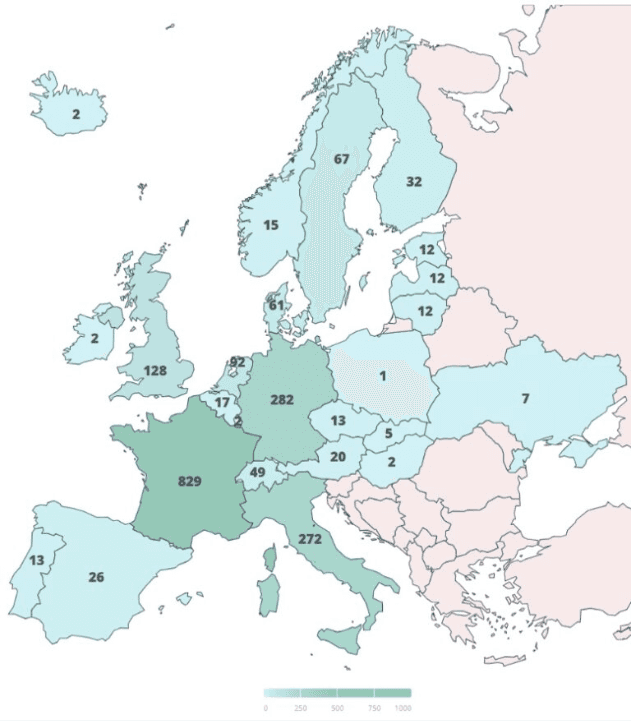
Number of biomethane plants per country across Europe
Related articles


Related articles


Is your clean energy claim still valid?
If you would like to find out more about our services, we'd love to hear from you. Get in touch and let us know how we can help.